Foundations
Embrace the good, engineer around the bad
Posit, open science, & the prime directive
Posit creates open-source software for data science, scientific research, and technical communication.
We build tools that prioritize correctness, transparency, and reproducibility in their output.
- Results are often generated via Excel, SPSS, JMP, etc., which can’t be verified as trustworthy.
- John M. Chambers coined the term “the prime directive”: the obligation for analysts to produce work that can be shown to be trustworthy.
Fulfilling the prime directive
- ✅ Correctness: (Obviously)
- ✅ Transparency: methods of the analysis can be inspected
- ✅ Reproducibility: analysis can be repeated on the same data, hopefully yielding the same results
LLM capabilities are jagged
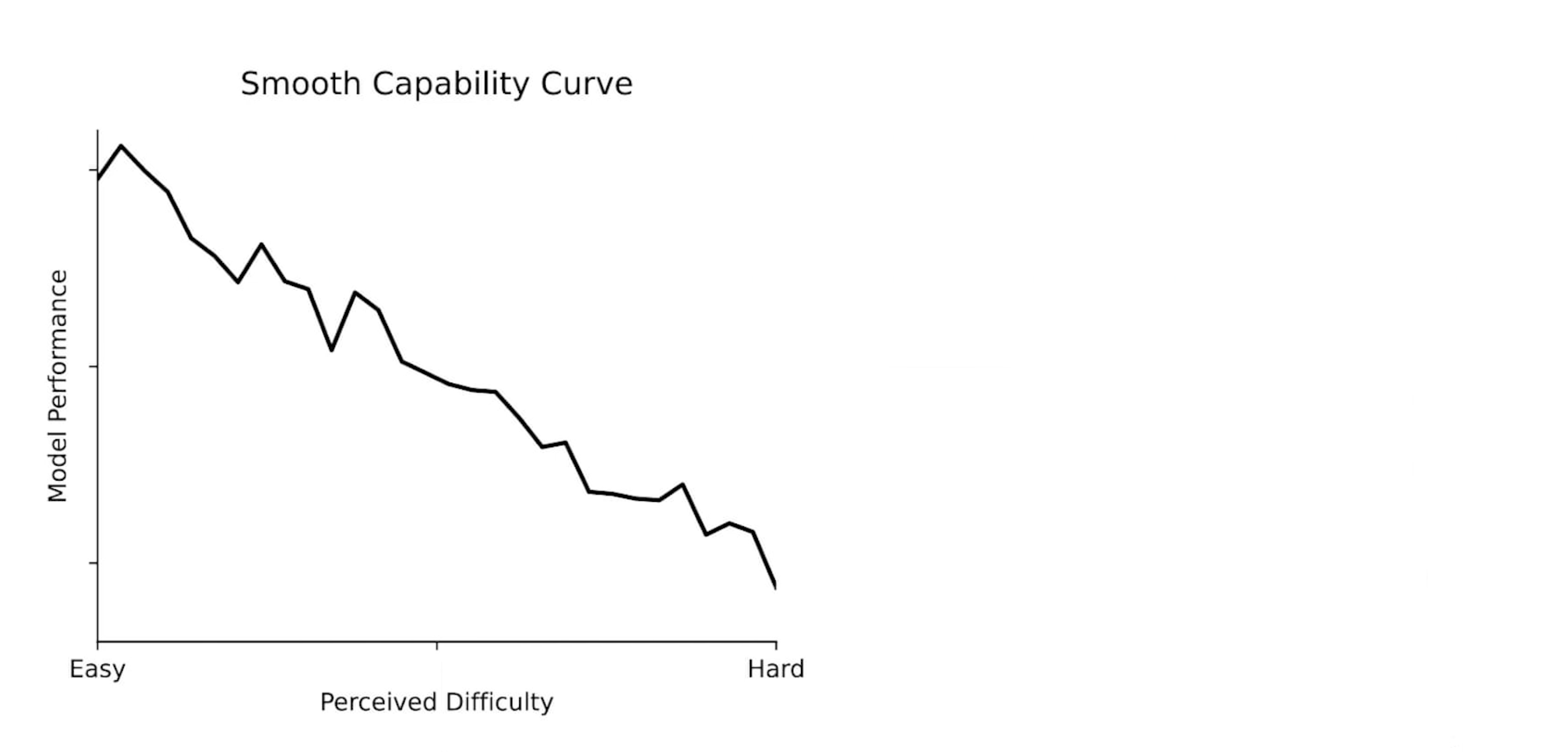
You might expect performance to drop with difficulty…
![]()
LLM capabilities are jagged
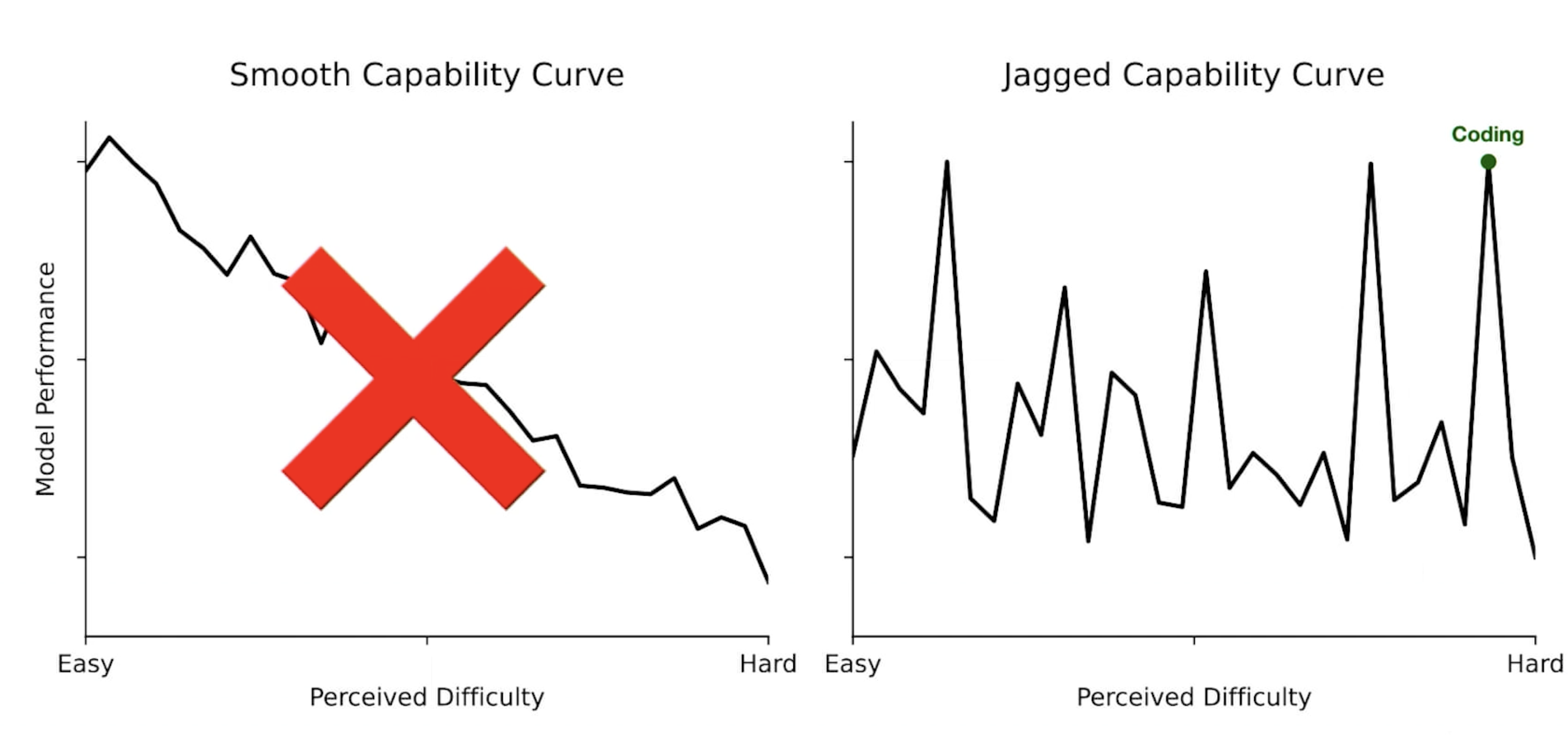
… but in reality, performance is jagged.
![]()
The bad: counting / computing
How many r’s are in “strawberry”?
Most LLMs confidently answer 2, but it’s actually 3.
The bad: counting / computing
How many values are in this array [4, 8, ...]?
- Again, most LLMs confidently answer incorrectly.
- However, if it can execute code, correctness dramatically improves.
- Bad at “implicit” computation, but awesome at coding!
- Excellent way for them to learn, be precise, and productive.
How do LLMs gain coding capabilities?
Through tool calling, which provides the foundation for agents.
The good: coding assistants
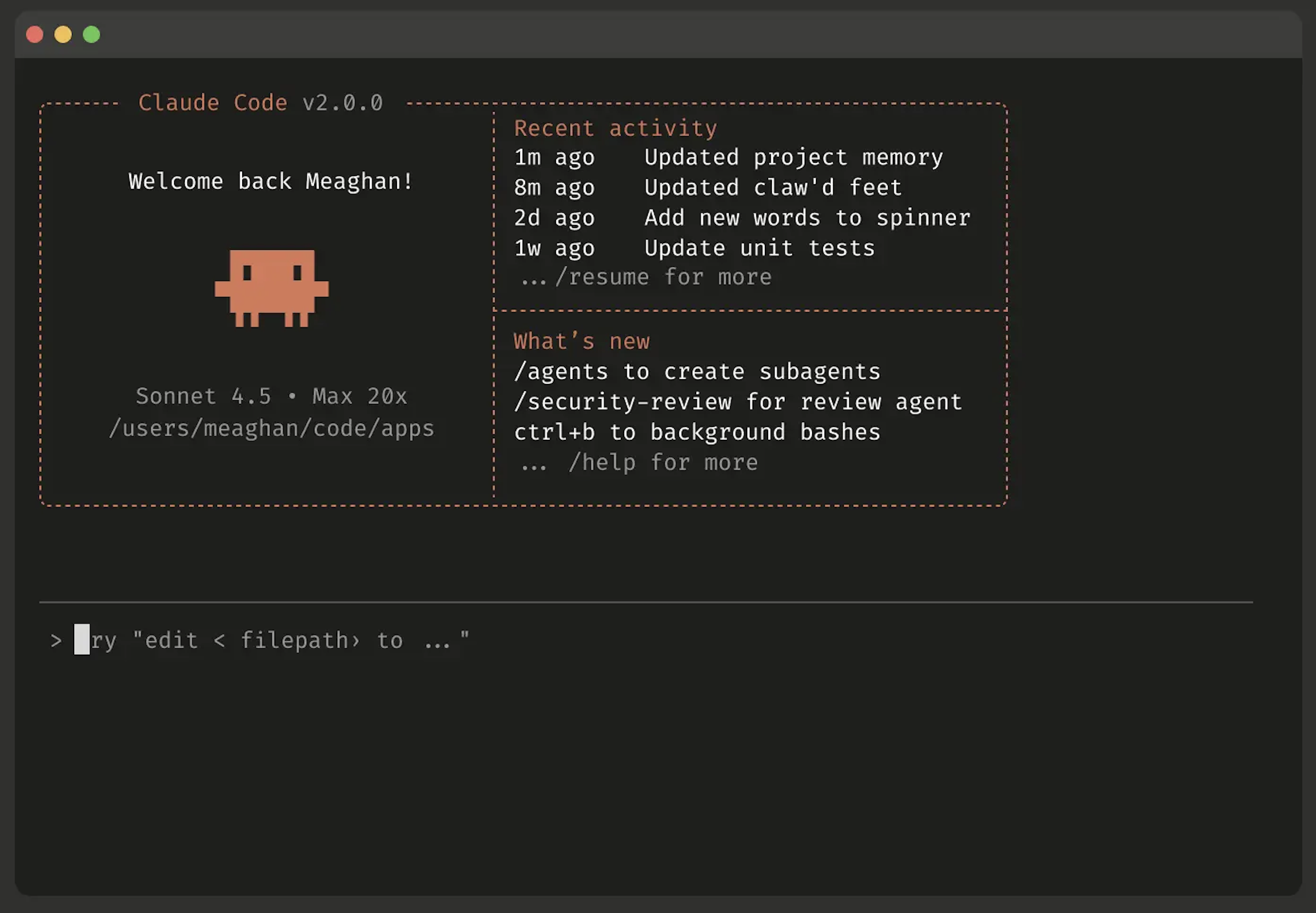
- Claude Code, Codex, and Copilot etc: harnesses that allow LLMs to write and execute code.
- Primarily designed for software engineering tasks
- IME, YOLO mode is incredibly useful, but also terrifying.
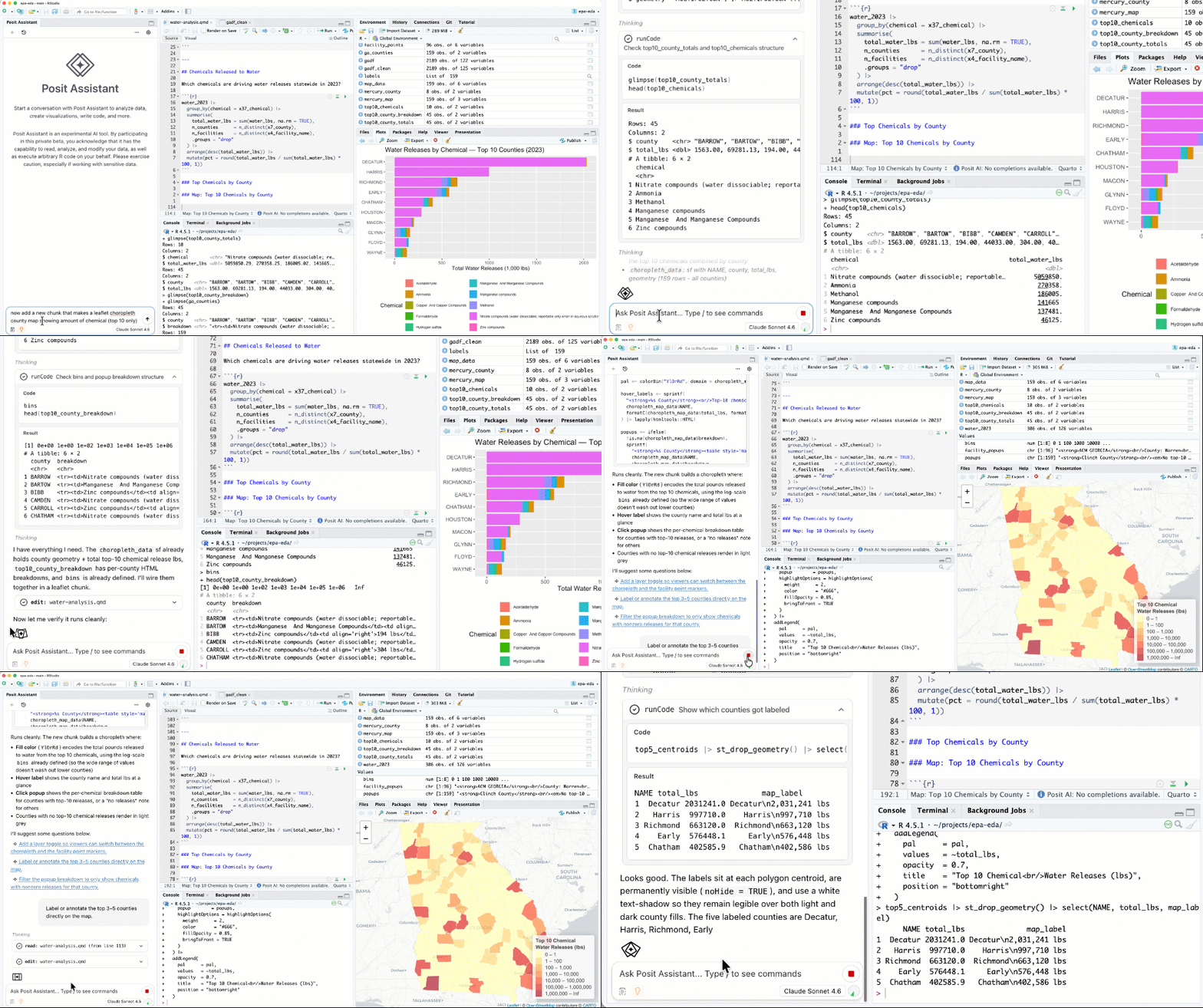
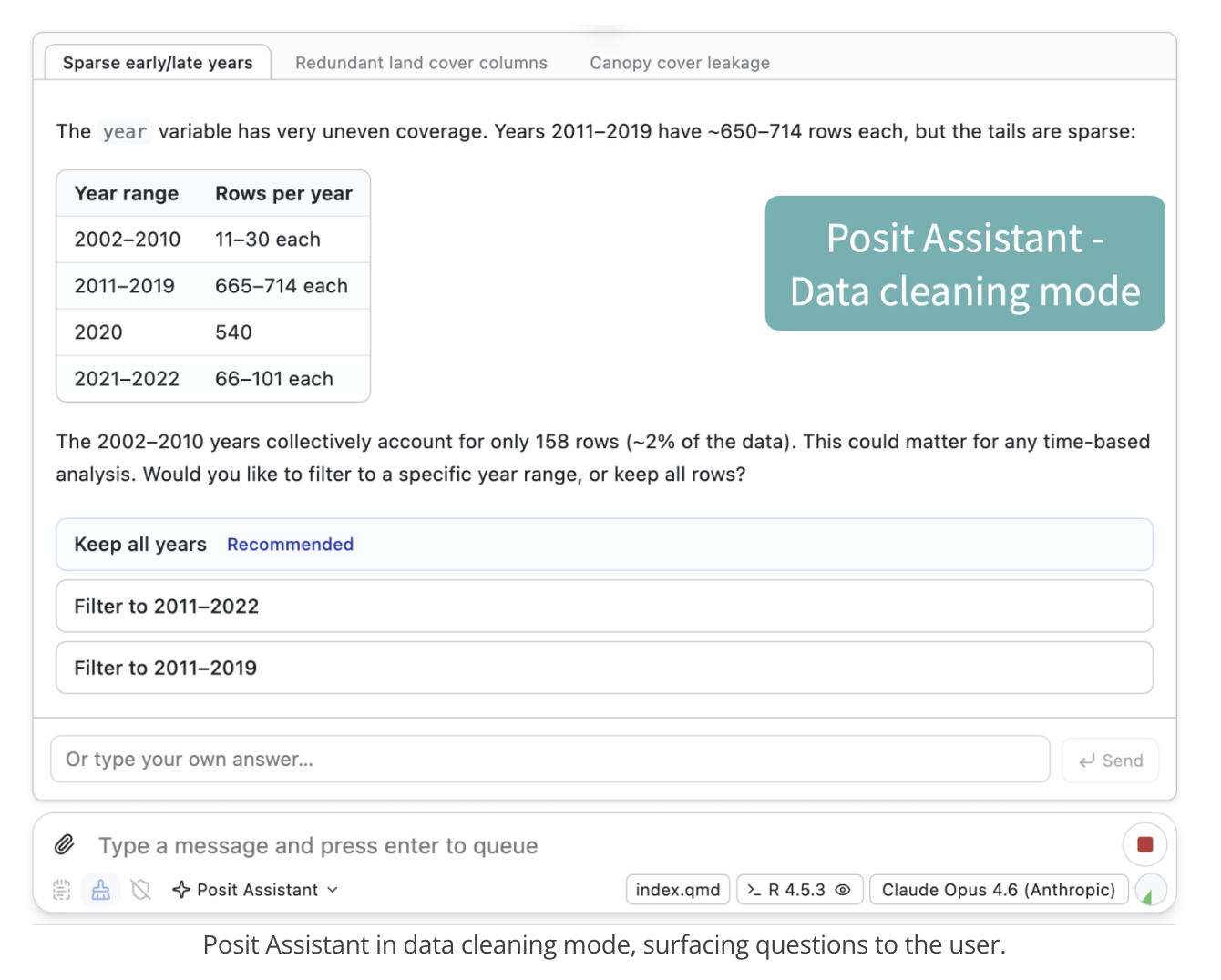
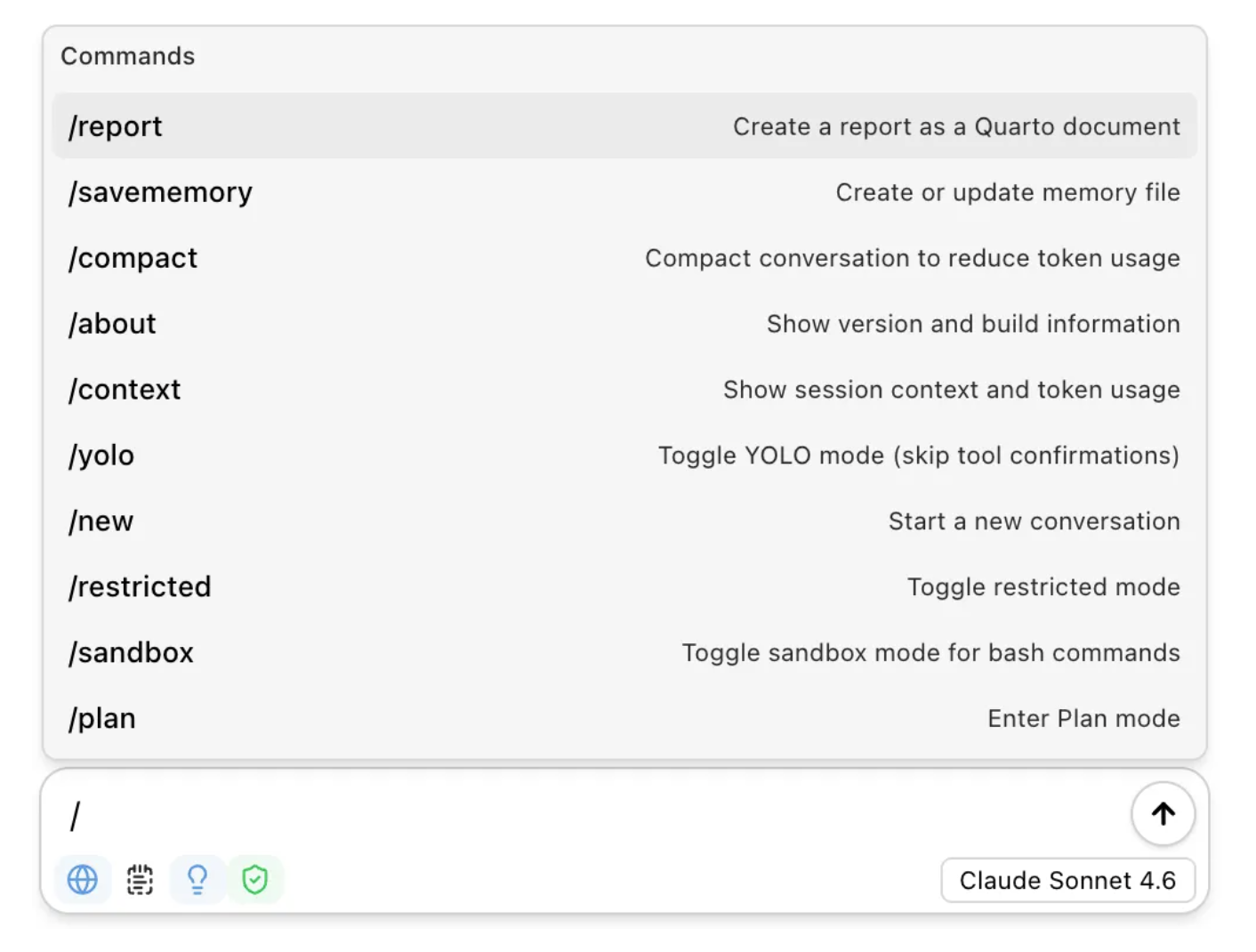
- Posit Assistant brings a similar experience to data science, and designs for human-in-the-loop workflows.
Posit Assistant
- Can access and control your Python/R sessions
Posit Assistant
Can access and control your Python/R sessions
Helpful features for doing data science
Tight integration with Positron, Notebooks, etc.
Posit Assistant
Can access and control your Python/R sessions
Helpful features for doing data science
Tight integration with Positron, Notebooks, etc.
Synthesize findings into reproducible reports, etc.
NOTE: Posit Assistant helps you do analysis – what about helping others leverage your work?
Querychat: ask more of your dashboards
- Web app framework for building AI assisted data exploration apps
- Restricted to SQL/ggsql queries for safety
- Supplies context from data you provide
- Limited scope can lead to more correct answers, but less creative ones
Goals for today
- Learn the basics of programming with LLMs (via chatlas).
- System prompts, tool calling, extracting data, etc.
- Learn the basics of shinychat, which makes it easy to build LLM-powered web apps.
- Plus some useful things for putting apps into production
- Form a mental model for how these things serve as the foundation for querychat.
- Hopefully this provides inspiration to create a tailored LLM-powered app for your own work.